
How it works
You paste in your text. We pull out the claims that need a source, check them against the databases researchers actually use, and rank what we find.
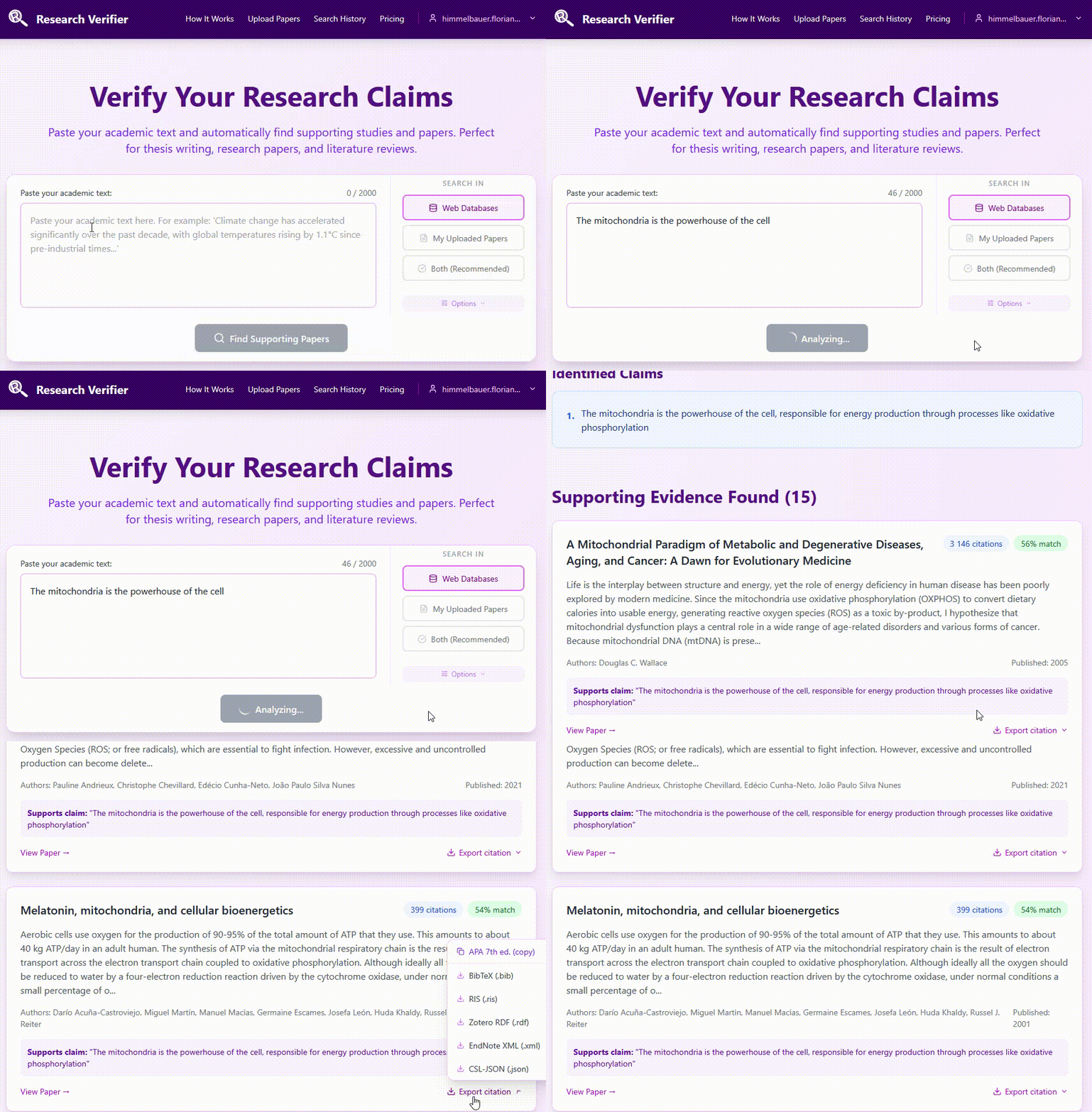
- 1
Finding what actually needs a source
We read through your text and pick out the statements a reviewer would ask “says who?” about: specific numbers, causal claims, things that aren't just your own opinion. For each one, we build a few different ways to search for it, not just one keyword, so a paper doesn't get missed purely because it uses different wording.
- 2
Searching where the papers actually are
Every claim gets checked against the databases researchers actually use, plus anything you've uploaded yourself: PubMed, OpenAlex, Semantic Scholar, Europe PMC, and arXiv.
- 3
Ranking what comes back
Keyword overlap alone misses a lot. A paper can be exactly what you need without sharing your wording. So each result is scored on three things at once: how closely it matches in meaning, how often it's been cited, and how recent it is.
- 4
Results you can actually use
You get a ranked list with everything you need to decide whether a paper fits and cite it if it does.
Where we search
Every academic database plus anything you've uploaded yourself.
Academic databases
- PubMed, for biomedical research
- OpenAlex, 250M+ works across all fields
- Semantic Scholar
- Europe PMC, for life sciences
- arXiv, for CS, physics, and maths
Your library
- Your uploaded PDFs
- Full-text extraction
- Keyword matching
- Local relevance scoring
How results get ranked
- Meaning (60%)
- compares the substance of your claim to the paper's abstract, not just shared words
- Citations (25%)
- on a log scale, so a heavily cited older paper isn't buried under newer ones
- Recency (15%)
- a small nudge toward newer research, all else being equal
Each result comes with
- A confidence score showing how strong the match is
- The full citation: authors, year, title
- The abstract, so you can sanity-check it yourself
- A direct link to the paper
- Which database it came from
Why bother with this instead of doing it by hand?
Saves an afternoon
Finding five decent sources by hand is slow. This gets you a ranked list in under a minute.
Catches what you'd miss
Papers that describe your claim in different words than you would still turn up, not just the ones matching your exact phrasing.
Ranked by more than keywords
Meaning, citation count, and recency all factor in, so a relevant paper doesn't get buried under one that just happens to share a word.
Common questions
How does Research Verifier find academic papers?+
It pulls the claims worth citing out of your text, then searches five academic databases at once: PubMed, Semantic Scholar, OpenAlex, Europe PMC, and arXiv. Results are ranked by relevance, citation count, and publication year.
What is semantic similarity scoring?+
It compares the meaning of your claim against a paper's title and abstract, not just the words in it. A paper can still turn up even if it describes the same idea in completely different terminology.
How does Research Verifier rank results?+
Three things, weighted: how closely a paper matches your claim in meaning (60%), how often it's been cited on a log scale so older landmark papers aren't buried (25%), and how recent it is (15%).
What citation export formats does Research Verifier support?+
BibTeX, RIS, Zotero RDF, EndNote XML, and CSL-JSON, so it works with Zotero, Mendeley, EndNote, and Paperpile.
Is Research Verifier free to use?+
Yes. The free plan gives you 10 analyses a month across all five databases, and paid plans start at €15/month if you need more.